

Online-Datenbank Dolmetscher / Übersetzer
Qualifizierte Sprachexperten für mehr als 80 Sprachen und viele Fachgebiete

Kontakt: 030 88712830
Stellenmarkt
Aktuelle Stellenangebote
für Dolmetscher und Übersetzer
finden Sie hier.
Stellenanzeige aufgeben:
Informationen zur Veröffentlichung von Stellenangeboten finden Sie hier.
Präsenz-/Online-Seminare finden und buchen
Fachliche und unternehmerische Qualifikation überall in Deutschland

Herzlich willkommen beim BDÜ –
dem Berufsverband professioneller Dolmetscher und Übersetzer in Deutschland
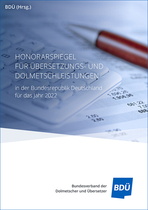
Frisch ab Presse: Der BDÜ Honorar- und Gehaltsspiegel
Die aktuelle Ausgabe der praktischen Orientierungshilfe
zu marktüblichen Honoraren für Übersetzungs- und
Dolmetschleistungen in Deutschland kann im
Online-Shop des BDÜ Fachverlags bestellt werden!
(BDÜ-Mitglieder erhalten ihr persönliches PDF-Exemplar
als Jahresgabe von ihrem Mitgliedsverband)
Neustrukturierung des Bundespolizeigesetzes: Verankerung des qualifizierten Dolmetschens und Übersetzens jetzt!
Anhörung im Bundestagsausschuss / BDÜ-Stellungnahme: Rechtssicherheit und hohe Qualität von Sprachdienstleistungen gewährleisten / Sicherstellung von Nichtdiskriminierung aufgrund von Sprache [mehr]
-
12.04.2024
Stärkung der Gesundheitsversorgung: BDÜ nimmt Stellung zu Gesetzentwurf aus dem BMG [mehr]
-
20.03.2024
Jobcenter: professionelle Verdolmetschung in der Beratung unverzichtbar [mehr]
Alle News-Beiträge
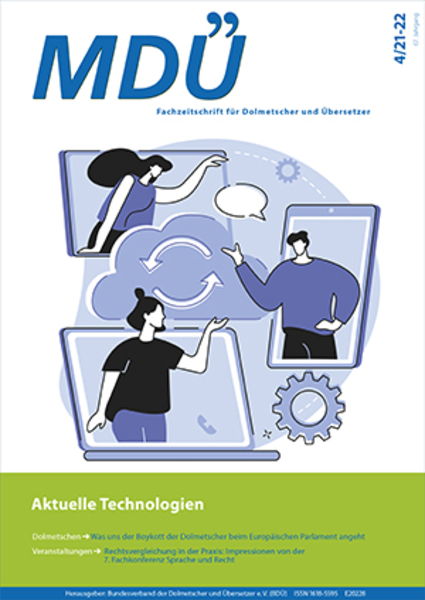
Die führende Fachzeitschrift für Dolmetschen und Übersetzen
Die vom BDÜ herausgegebene auflagenstärkste Fachzeitschrift für Dolmetschen und Übersetzen im deutschsprachigen Raum berichtet praxisnah über Arbeitswerkzeuge wie Translation-Memory-Systeme, bringt Interviews und Hintergrundberichte zu neuen wissenschaftlichen Erkenntnissen, Gesetzen, Vorschriften und vieles mehr.
Das MDÜ erscheint sechs Mal im Jahr und kann über den BDÜ Fachverlag abonniert werden.
Die Redaktion freut sich über interessante Autorenbeiträge und nimmt Ihre Anzeigenwünsche gern entgegen. Zum Fachverlag
Berufsbild
Sie möchten wissen, wie man Dolmetscher oder Übersetzer wird und welche Anforderungen der Beruf stellt? Das und viele spezielle Hinweise, z.B. über die Arbeit für Behörden und die Gebärdensprache finden Sie hier.
Wir über uns
Sie möchten sich über Ziele, Aufgaben oder auch über die Leistungen unseres Berufsverbandes informieren? Lesen Sie hier, wie der BDÜ seine Mitglieder aktiv unterstützt und wie er sich für hohe Qualität und Professionalität einsetzt.
Presse- und Öffentlichkeitsarbeit
Journalisten und Redaktionen finden hier wichtige Informationen zu aktuellen Entwicklungen in der Branche sowie zum BDÜ und seinen Aktivitäten. Fundierter fachlicher Input des größten deutschen Branchenverbands für Ihre Artikel und Beiträge.
Auftragsvergabe
Wieviel kostet eine Übersetzung? Welches Honorar berechnen Dolmetscher? Wie findet man gute Dolmetscher oder Übersetzer? Wichtige Tipps für Ihren Erfolg.
Weiterbildung
Lebenslanges Lernen ist eine Grundvoraussetzung, um in unserem Beruf Leistungen in hoher Qualität erbringen zu können. Die breite Palette von BDÜ-Seminaren bietet dafür kostengünstige Möglichkeiten.
BDÜ-Mediathek
Anschauliche Informationen über den Beruf des Dolmetschers und Übersetzers sowie über die Verbandsaktivitäten des BDÜ finden Sie hier als Video und Audio.











Jetzt Mitglied werden!
Der Bundesverband der Dolmetscher und Übersetzer e.V. (BDÜ) ist mit mehr als 7 500 Mitgliedern der größte deutsche Berufsverband der Branche. Er repräsentiert damit gut 80 Prozent aller organisierten Dolmetscher und Übersetzer in Deutschland und ist Ansprechpartner für Handel, Industrie, Politik und Ausbildungswesen. Der BDÜ vertritt seit 60 Jahren die Interessen von Dolmetschern und Übersetzern – sowohl in Deutschland als auch international.
Eine BDÜ-Mitgliedschaft steht für Qualität: Alle Mitglieder haben vor der Aufnahme in den Verband ihre fachliche Qualifikation nachgewiesen. Mit einem umfangreichen Weiterbildungsprogramm, durch Förderung der Netzwerkbildung, Kommunikation und des Wissensaustauschs trägt der BDÜ zur Qualitätssicherung der Berufsausübung seiner Mitglieder bei.
Als Dachverband repräsentiert der BDÜ-Bundesverband mit Sitz in Berlin die ihm angeschlossenen 12 Mitgliedsverbände. Die Mitgliedsverbände arbeiten vorrangig auf Landesebene, aber auch berufsgruppenorientiert wie der Verband der Konferenzdolmetscher (VKD) im BDÜ e. V.
Auskünfte zur Mitgliedschaft im BDÜ erteilen die Geschäftsstellen der Mitgliedsverbände. Weitere Informationen sowie alle wichtigen Dokumente zum Download finden Sie in unserem Aufnahmeantrag, der bequem online ausgefüllt werden kann.
Weitere Publikationen des BDÜ
Broschüren und Infomaterialien über den Verband und den Beruf des Dolmetschers bzw. Übersetzers können jederzeit kostenfrei bei der Bundesgeschäftsstelle des BDÜ angefordert werden.
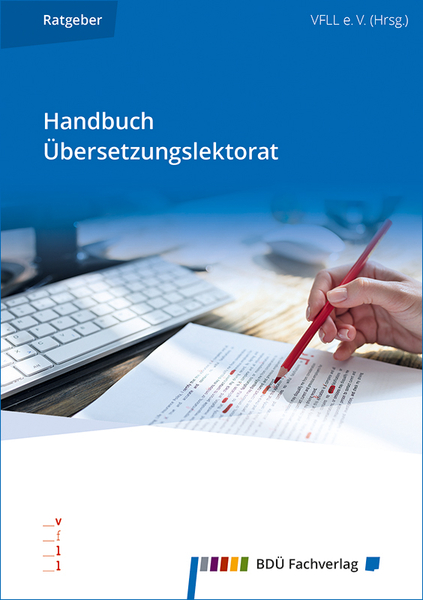
Handbuch Übersetzungslektorat
In diesem Handbuch teilen erstmals mehr als 20 erfahrene Übersetzungslektor*innen ihre Expertise. Sie geben Tipps zu verschiedensten Genres, Textsorten und Sprachen, dazu, wie Zusammenarbeit bestmöglich gelingt, und grenzen die Übersetzung vom Lektorat ab. In Kooperation mit dem Verband der Freien Lektorinnen und Lektoren (VFLL e. V.) ist so ein Standardwerk im Bereich Übersetzungslektorat entstanden.
Dieses Buch online bestellen
Verlagsprogramm
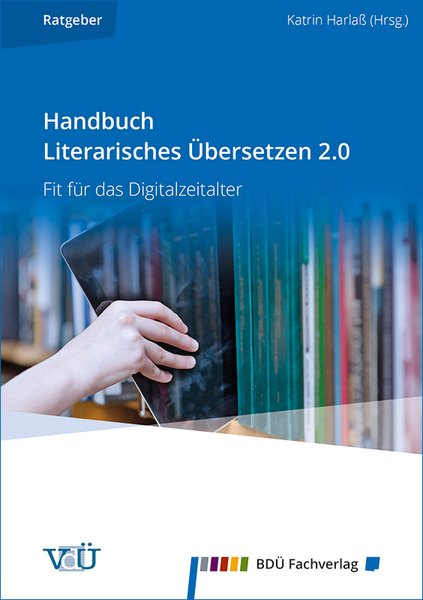
Handbuch Literarisches Übersetzen 2.0 – Fit für das Digitalzeitalter
Vielfältige Entwicklungen haben den Arbeitsalltag auch der Literaturübersetzer:innen nachhaltig verändert, stellen uns vor Herausforderungen, bieten aber auch neue Chancen: Digitalisierung, Gendern, antirassistische, diskriminierungsfreie Sprache. Internationale und gesamtwirtschaftliche Entwicklungen zwingen uns, unser Geschäftsmodell immer wieder auf den Prüfstand zu stellen, uns zu vernetzen, neue Betätigungsfelder zu erschließen und selbstbewusst unsere Interessen zu vertreten. Dieser Ergänzungsband zum Thema Literaturübersetzen versammelt Beiträge von über 30 Autorinnen und Autoren, die uns auf die Höhe der Zeit bringen.
Dieses Buch online bestellen
Verlagsprogramm
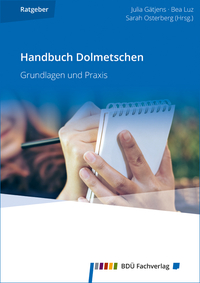
Handbuch Dolmetschen
Das „Handbuch Dolmetschen“ behandelt alle Themen rund um das Dolmetschen. Nach einem einleitenden Kapitel mit Definitionen werden die Voraussetzungen und Ausbildungsmöglichkeiten beschrieben. Daran anschließend stellen Fachleute jeweils spezielle Ausprägungen des Dolmetschens vor: Konferenzdolmetschen, Dolmetschen für die EU, Dolmetschen für Justiz und Polizei, Dolmetschen im Gesundheits- und Gemeinwesen, Dolmetschen bei Betriebsführungen, Mediendolmetschen, Schriftdolmetschen, Gebärdensprachdolmetschen oder Dolmetschen in Leichte Sprache.
Dieses Buch online bestellen
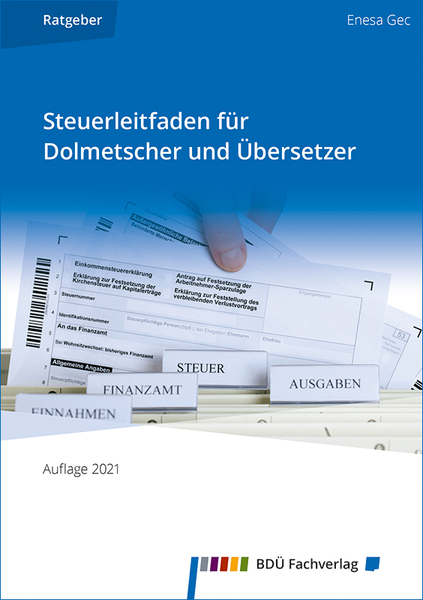
Steuerleitfaden für Dolmetscher und Übersetzer
Auflage 2021
Neben betriebswirtschaftlichen Zahlen sind die steuerlichen Themen wie Abgabeverpflichtungen gegenüber den Finanzbehörden, Buchhaltung und Gewinnermittlung, Rechnungsschreibung und viele andere von großer Bedeutung. Es werden die wesentlichen Eckpfeiler, Besonderheiten und Fallstricke ausführlich und mit praxisnahen Beispielen erörtert. Der neue Leitfaden ist so praxisnah wie möglich geschrieben. Deswegen finden Sie im Text wenig Hinweise auf Paragraphen. Stattdessen wurden über fünfzig Fallbeispiele zum besseren Verständnis in das Buch aufgenommen.
NEU in der Auflage 2021: Ein ganzes Kapitel zu Corona-Hilfen.
Verlagsprogramm
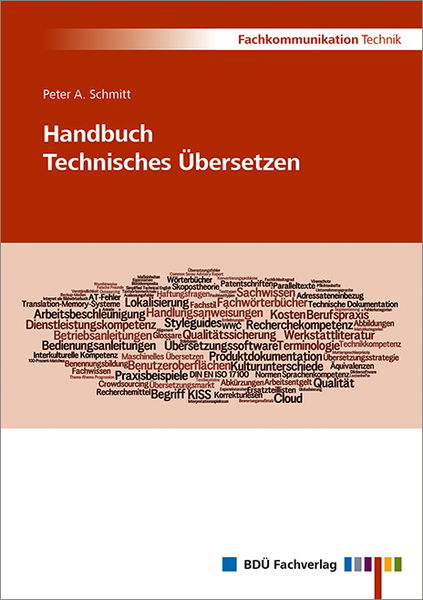
Handbuch Technisches Übersetzen
Übersetzer gibt es viele. In Relation zum Marktbedarf gibt es aber zu wenige gute technische Übersetzer. In diesem Buch erfahren Sie, was gute technische Übersetzer ganz konkret können sollten – und wie sie diese Kompetenzen erwerben. Der Autor behandelt die Ausstattung des Arbeitsplatzes (Hard- und Software, Recherchemittel) ebenso wie die richtige Herangehensweise an die relevanten Textsorten mit ihren speziellen Phänomenen und natürlich auch die Qualitätssicherung. Er liefert eine Fülle von Fakten und praxisbewährten Tipps auf solider theoretischer Basis und verpackt das Ganze im typischen Schmitt’schen Infotainment-Stil. Die über 700 Seiten mit über 180 Abbildungen und Hunderten praktischer Beispiele sind eine horizonterweiternde und hilfreiche Lektüre, die auf unterhaltsame Weise zeigt, wie man ein guter und gut verdienender technischer Übersetzer wird. Dieses Buch online bestellen